
Chat with us
1

Beyond Color: The Technical Importance of Wall Finishing Plans in 3D

5 min read
Beyond Color: The Technical Importance of Wall Finishing Plans in 3D

The walls of a building are its largest visible surfaces, and they dictate the atmosphere, light reflection, and style of every room. However, choosing between a simple paint job, a sophisticated wallpaper, or a luxury stone cladding is a complex decision. The Plan Revêtement Mur & Peinture (Wall Finishing and Paint Plan) is the technical roadmap that defines the nature, location, and surface area of every finish in the project. At Buildmodeler 3D, we use 3D Modeling to ensure that your walls are not just painted, but strategically designed for maximum impact.

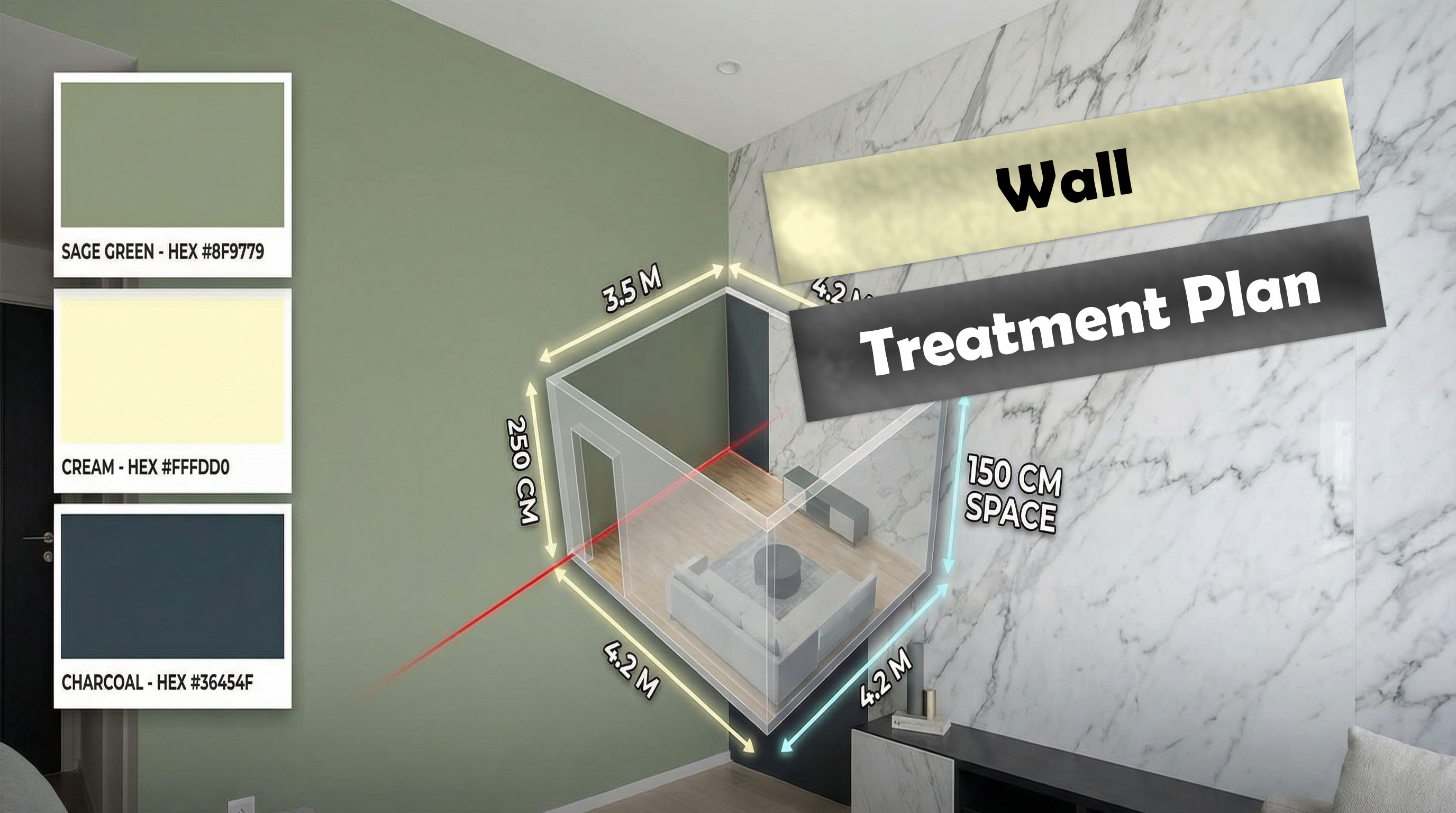
What is a Wall Finishing and Paint Plan? This plan is a vital part of the DCE (Technical Dossier) phase. It provides a detailed inventory of every wall surface in the building. Instead of guessing, this plan specifies:

1. Material Specification: Identifying which walls will receive paint, wood paneling, marble cladding, or ceramic tiles.
2. Surface Calculations: Providing the exact square footage of each finish, which is essential for purchasing materials.
3. Color Codes: Listing specific paint references (RAL or NCS codes) to ensure the contractor uses the exact shade intended by the designer.

The Complexity of Vertical Surfaces Many owners underestimate the complexity of wall finishes. A "grey" paint can look blue under cold LED lighting or green next to a wooden floor. Without a precise plan, contractors might apply the wrong finish to a specific wall, or worse, you might find yourself with an expensive surplus of materials due to incorrect measurements.

Why 3D Modeling is Essential for Wall Finishes & Paint Integrating 3D Modeling into this phase shifts the project from "imagination" to "visual certainty":

4. Photorealistic Color Testing: In 3D, we can apply the exact paint codes to your digital walls. You can see how the color changes from morning to night under realistic sunlight simulations. This "Digital Prototype" allows you to finalize your color palette with 100% confidence before a single drop of paint is bought.
5. Material Texture Interaction: A 3D model allows you to see how different textures interact. For example, you can visualize how a matte paint looks next to a glossy marble wall. This level of coordination ensures a harmonious "Language of Materials" throughout the project.
6. Exact Quantity Survey (Métrés): Wall materials, especially decorative stones or bespoke wood panels, are costly. 3D software calculates the exact "Net Surface Area" (subtracting windows and doors) for each material. This provides you with a precise shopping list, ensuring you pay only for what you actually need.
7. Visualizing Accent Walls: 3D rendering is the perfect tool to decide which wall should be the "Feature Wall." You can experiment with bold colors or heavy textures on different walls virtually to find the perfect balance that enhances the room's volume without overwhelming it.

Conclusion The Wall Finishing and Paint Plan is the final layer of your project’s identity. By leveraging Advanced 3D Modeling, you eliminate the risks associated with color perception and material waste. It provides the ultimate technical guide for painters and decorators, ensuring that the final atmosphere of your building is exactly as envisioned in the design phase.

Discover more articles

Explore our collection of articles on 3D modeling and architecture.