
Chat with us
1

The Face of Architecture: Why 3D Facade Planning is Essential for Modern Buildings

5 min read
The Face of Architecture: Why 3D Facade Planning is Essential for Modern Buildings

If the floor plan is the heart of a building, the Facade (La Façade) is its soul. It is the first point of contact between the architecture and its environment. Beyond being just an exterior wall, the facade defines the aesthetic identity, the thermal performance, and the overall value of the project. At Buildmodeler 3D, we understand that a facade shouldn't just be "drawn"—it must be "sculpted" in a digital environment. This is why we place 3D Modeling at the center of our facade design process.

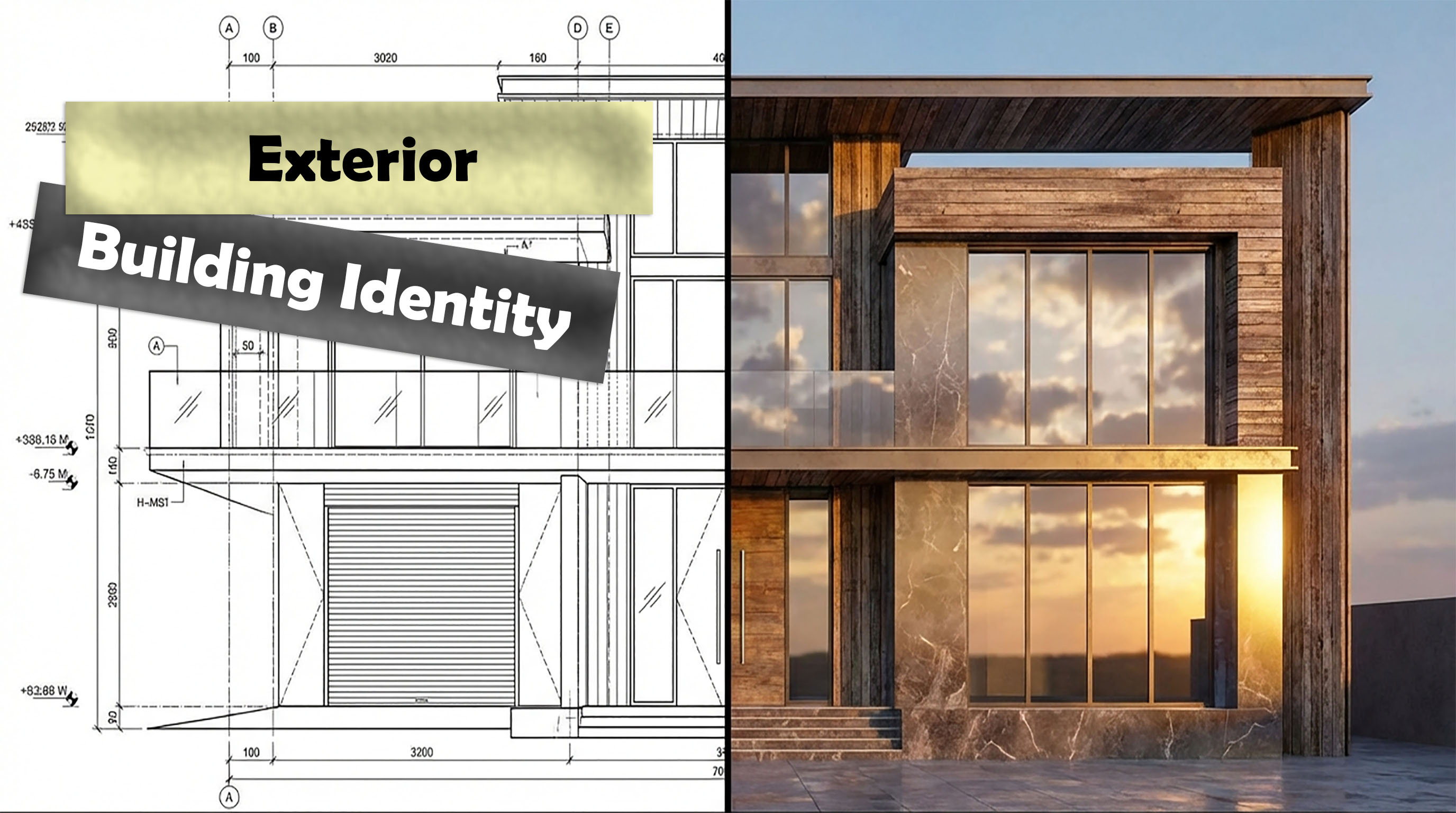
What is an Architectural Facade Plan? A Facade Plan, also known as an "Elevation," is a technical drawing that shows one side of the building from the outside. It provides crucial information used during the DPC and DCE phases:

1. Aesthetic Composition: Detailing the relationship between solid walls and glass openings.
2. Material Specification: Identifying where stone, wood cladding, aluminum, or paint will be applied.
3. Architectural Ornaments: Showing the design of balconies, pergolas, and decorative slats.
4. Height Control: Confirming the vertical alignment of windows and doors across different levels.

The Challenge of 2D Elevations In traditional 2D architecture, a facade can look flat and lifeless. It is difficult for an owner to understand the "depth" of a balcony or the way sunlight will interact with the materials. A 2D drawing cannot accurately represent the shadows created by architectural projections or the true reflection of glass. Without a 3D preview, a facade that looks good on paper might look plain or disproportionate in reality.

Why 3D Modeling is Essential for Facade Design Integrating 3D Modeling into the facade planning phase transforms the design process into a high-precision art form:

5. Visualizing Real-World Textures: In 3D, we don't just apply a color; we apply a material. You can see the actual grain of the stone or the sheen of the metal. This allows you to choose your exterior finishes with absolute confidence, ensuring the building looks exactly as you imagined.
6. Shadow and Depth Analysis: 3D modeling allows us to simulate the sun’s path. You can see how deep shadows will fall across the facade at different times of the day. This is vital for designing "Brise-soleil" (sun-shades) that are both beautiful and functional, reducing heat gain inside the building.
7. Perfect Proportions: A 3D model allows us to rotate the building and view the facade from multiple angles. This ensures that the building looks balanced from the street, the garden, and the sky. We can adjust the size of a window or the height of a parapet in real-time until the proportions are perfect.
8. Seamless Integration with Lighting: Modern facades are often illuminated at night. In 3D, we can place virtual lights to design the "Nighttime Identity" of your project. You can see the uplighting on stone walls and the glow from large glass surfaces before any electrical work is installed.

Conclusion The Architectural Facade is the statement your building makes to the world. By leveraging Advanced 3D Modeling, you eliminate the guesswork associated with exterior design. It provides the contractor with an indisputable guide for materials and the owner with a breathtaking, photorealistic preview, ensuring that your building's "face" is a perfect fusion of style and engineering.

Discover more articles

Explore our collection of articles on 3D modeling and architecture.