
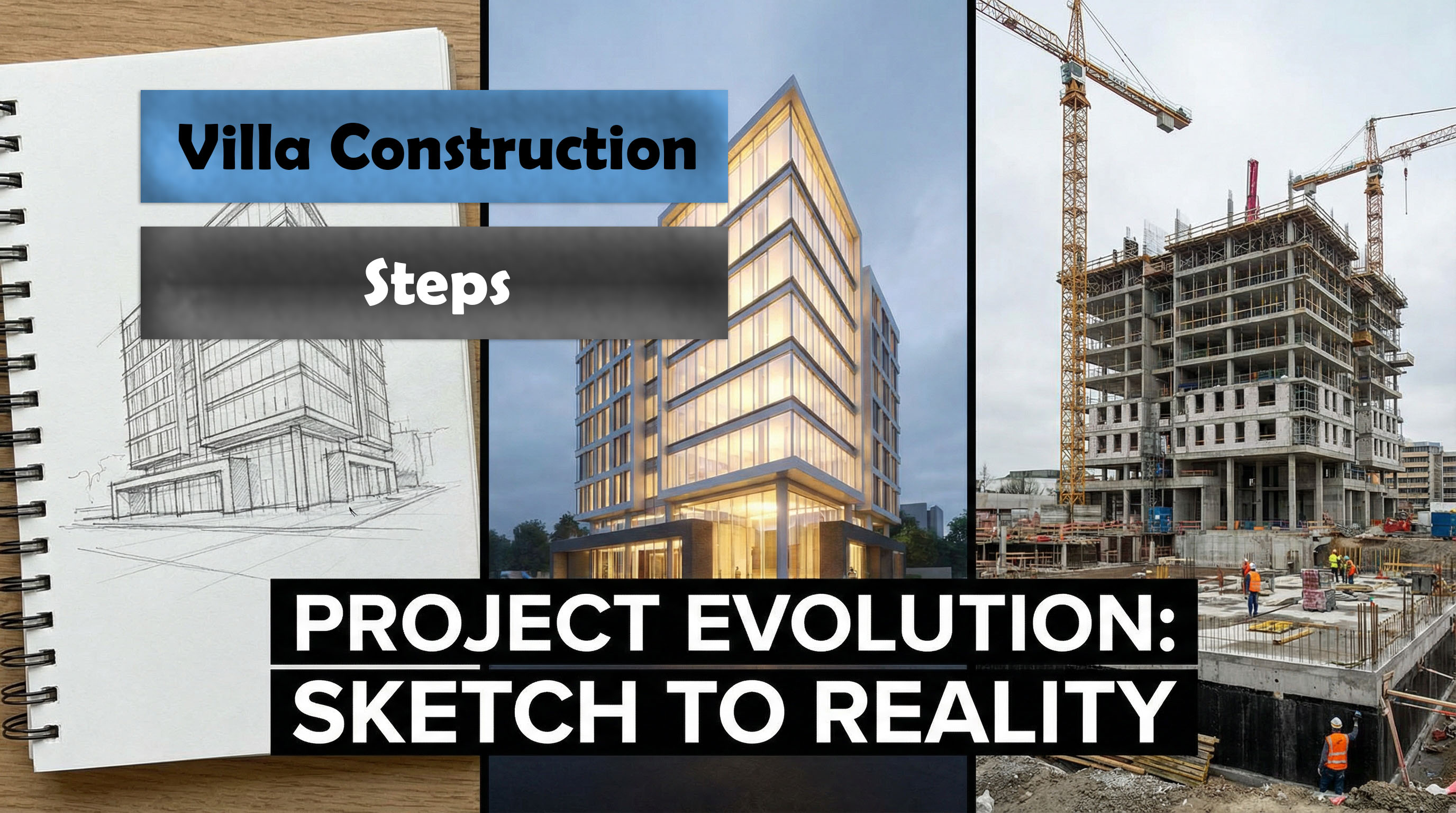
Embarking on a construction project is a complex venture that requires a clear structure to move from an idea to a physical reality. Whether you are planning a modern office, a residential complex, or a specialized facility, the process follows four fundamental technical phases: ESQ, DPC, DCE, and EXE. In today’s industry, 3D Modeling is no longer a luxury; it is the essential tool that guarantees success at every single one of these stages.
Phase 1: ESQ (Esquisse - The Conceptual Sketch) The ESQ phase is where the project's DNA is created. In this stage, the architect translates your functional needs and aesthetic desires into preliminary volumes and spatial organizations.
Phase 2: DPC (Dossier de Permis de Construire - The Authorization Phase) Once the concept is approved, the project enters the DPC phase. This is the administrative gateway where technical documents are prepared for submission to local authorities to obtain the necessary building permits.
Phase 3: DCE (Dossier de Consultation des Entreprises - The Tendering Phase) The DCE is the technical heart of the project. A comprehensive dossier is created, including detailed specifications and quantities, to consult various contractors and obtain accurate price quotes.
Phase 4: EXE (Exécution - The Construction Phase) The final stage, EXE, involves creating the ultra-detailed working drawings that guide the workers on the construction site. These plans cover every technical detail required for actual building.
Conclusion Navigating through ESQ, DPC, DCE, and EXE ensures a disciplined and professional result. By integrating 3D Modeling into each phase, you transform a technical process into a transparent, visual, and highly efficient journey, ensuring that what was imagined is exactly what is built.